
Author name: Mobility153

How Do You Tune a Car in the Most Practical Way?
Tuning

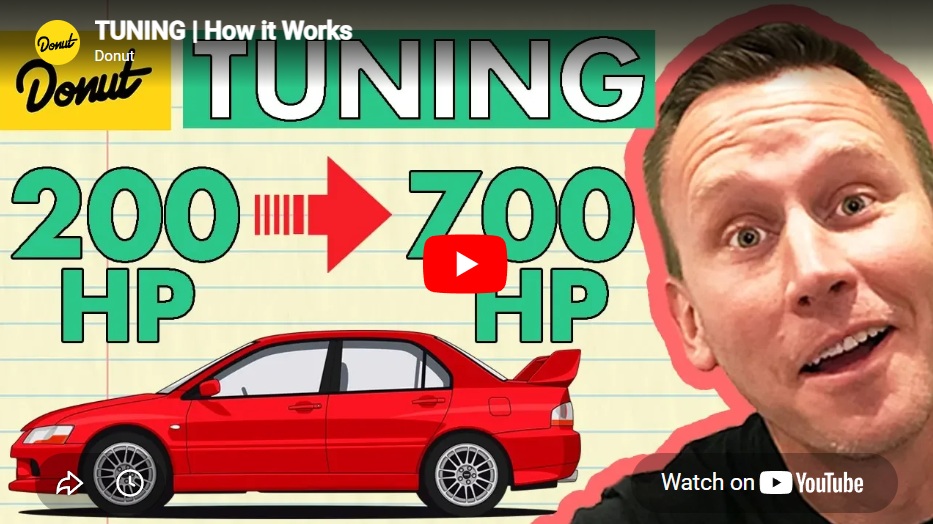
How Do You Tune a Car in the Most Practical Way?

This video outlines practical, cost-effective, and DIY methods for boosting car performance and horsepower without breaking the bank. The host covers essential routine maintenance, bolt-on performance upgrades (intake and exhaust), custom ECU dyno tuning, non-horsepower speed improvements (weight reduction, tires, driver training), and sourcing OEM performance parts from junkyards.
How Has Car Tuning Evolved Over Time?
Tuning

How Has Car Tuning Evolved Over Time?

This video explains how car engine tuning has evolved from mechanical adjustments (like tweaking carburetors, timing belts, and distributors) to computer-controlled software optimization via Engine Control Units (ECUs). It covers how modern ECUs use data from sensors to manage air-fuel ratios, ignition timing, and variable valve timing across a broader RPM band. Additionally, it breaks down the history of diagnostic ports leading to standard OBD-II systems and discusses realistic performance expectations when remapping an ECU.

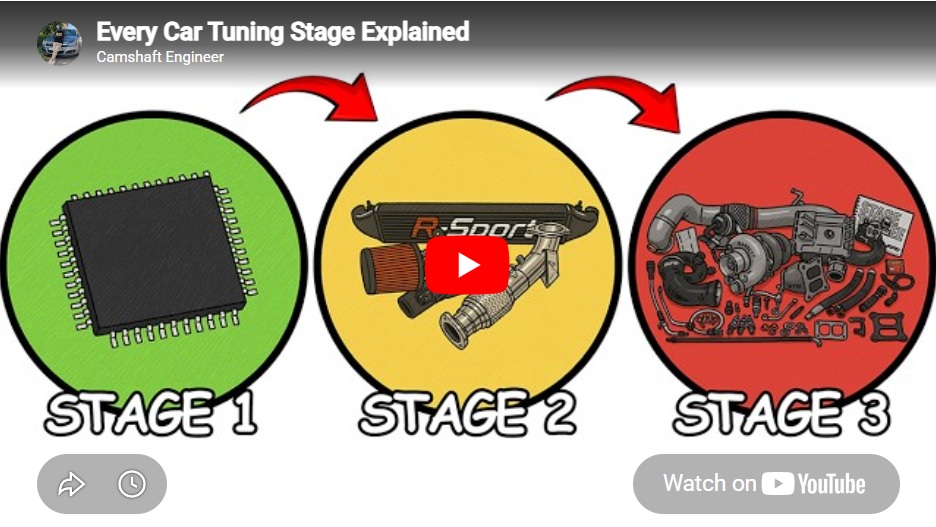
Tuning a Car in 3 Stages: How It Works
Tuning

Tuning a Car in 3 Stages: How It Works

The video breaks down the three main stages of aftermarket car tuning (ECU remapping, supporting hardware, and major internal engine rebuilds). It explains what components are modified at each level, the expected performance gains, cost implications, and trade-offs regarding reliability, drivability, and emissions compliance.

How Does a 4WD System Work?
Diesel Engine Car

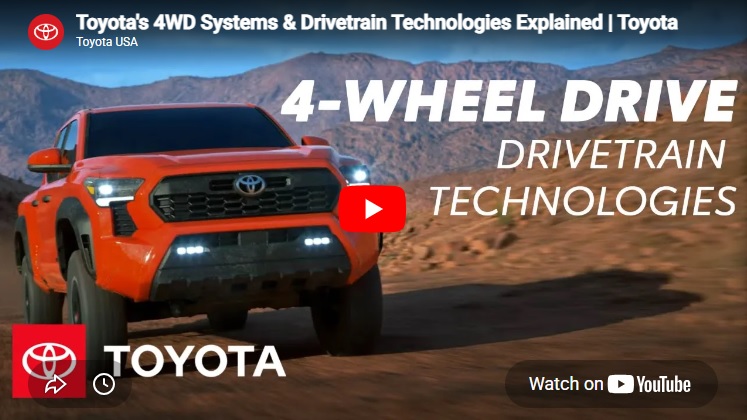
How Does a 4WD System Work?

This video provides an overview of Toyota’s body-on-frame 4WD systems and drivetrain technologies. It highlights the fundamental differences between Part-Time 4WD and Full-Time 4WD configurations, explaining how transfer cases, planetary gear sets, Torsen center differentials, active traction control (A-TRAC), and locking differentials function to optimize performance across various terrain conditions.

What Does a Car Differential Do?
Gasoline - Toyota

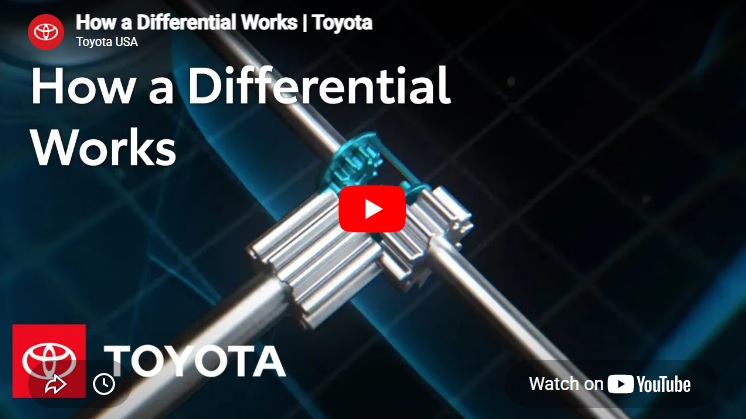
What Does a Car Differential Do?

This video explains the fundamental automotive concept of a differential—a central gearbox allowing wheels on the same axle to rotate at different speeds. It outlines why differentials are necessary for smooth cornering, describes how “open” differentials can lose power on low-traction surfaces like ice, and introduces the various mechanical and electronic solutions (such as locking, limited-slip, and torque-vectoring systems) used across the Toyota lineup to maintain traction and stability.

What Is Toyota i-FORCE MAX and How Does It Work?
Hybrid - Toyota

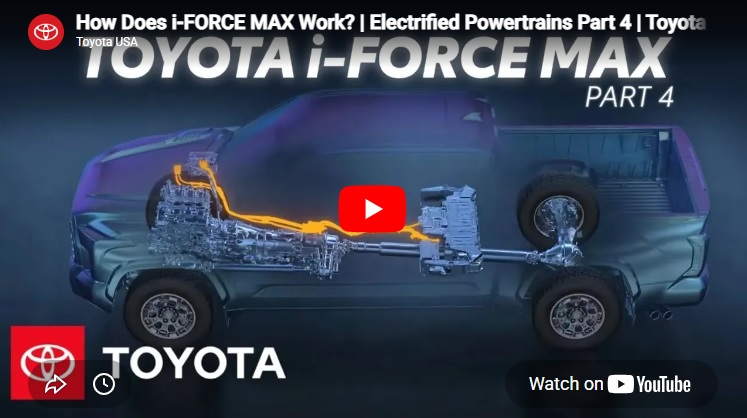
What Is Toyota i-FORCE MAX and How Does It Work?

The video explains Toyota’s i-FORCE MAX hybrid system, which is specifically engineered for trucks and SUVs. Unlike traditional passenger-car hybrids designed primarily for maximum fuel efficiency, the i-FORCE MAX system focuses on delivering high torque, towing capacity, and off-road capability without sacrificing fuel efficiency. It achieves this by sandwiching a powerful electric motor between an internal combustion engine and a rugged, conventional automatic transmission, utilizing a fully mechanical drivetrain for four-wheel-drive performance.

What is Toyota Hybrid MAX and How Does It Work?
Hybrid - Toyota

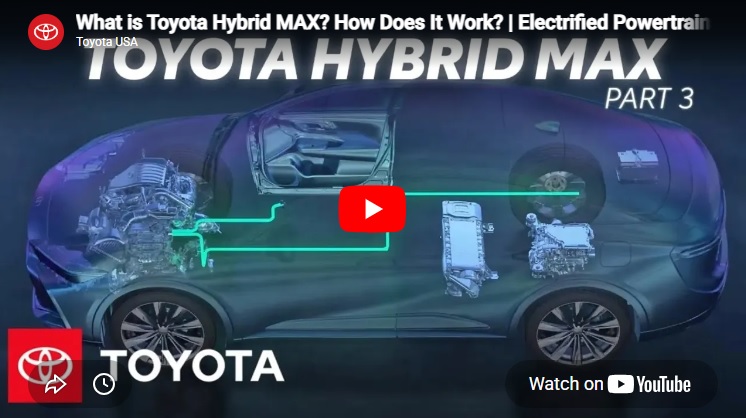
What is Toyota Hybrid MAX and How Does It Work?

The video explains Toyota’s Hybrid MAX EV system, a single-motor, parallel hybrid platform designed specifically for high performance. Unlike the traditional efficiency-focused Toyota Hybrid System (THS), Hybrid MAX pairs a turbocharged engine with a 6-speed automatic transmission, a bipolar nickel-metal hydride battery, and an advanced e-Axle all-wheel-drive system to maximize power delivery, responsiveness, and driving excitement while maintaining high efficiency.

How Does a Valvetrain (Camshaft System) Work?
Gasoline - Toyota

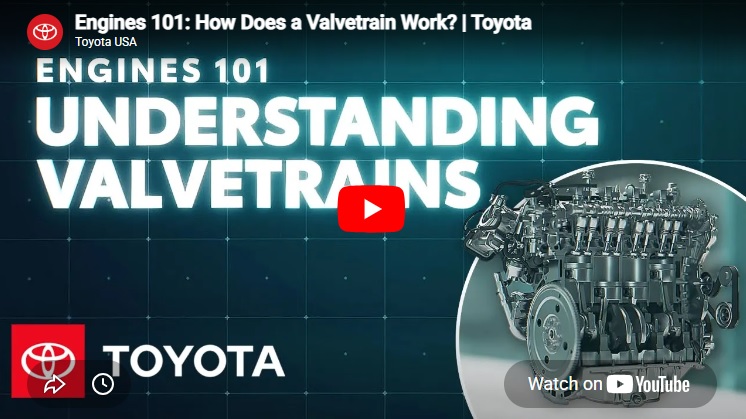
How Does a Valvetrain (Camshaft System) Work?

This educational video breaks down the fundamentals of an internal combustion engine’s valvetrain—often described as how the engine “breathes.” It explains how camshafts actuate intake and exhaust valves to generate power and explores the mechanical variations in valvetrain design. Furthermore, it details how Toyota uses advanced technologies like Variable Valve Timing with Intelligence (VVT-i) and the fuel-efficient Atkinson Cycle to dynamically balance performance, power, and fuel economy.

How Does a Car Transmission System Work?
Gasoline - Toyota

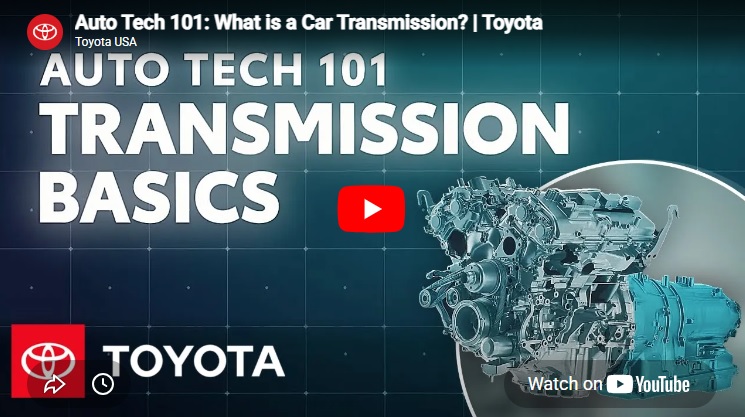
How Does a Car Transmission System Work?

This educational video explains the purpose and basic mechanics of a car transmission. It highlights how transmissions act as an essential intermediary between the engine and the wheels to keep the engine operating within its optimal RPM range. The video breaks down the fundamentals of gear ratios and compares the operation of manual, conventional automatic, continuously variable (CVT), and hybrid transmissions.

Scroll to Top